For couples undergoing IVF treatment, one of the most important decisions is choosing between a fresh embryo transfer and a frozen embryo transfer (FET). Both approaches can lead to a healthy pregnancy, but they differ in timing, preparation, success rates, and suitability depending on each patient's individual circumstances.
It is a common misconception that one method is always better than the other. In reality, the right choice depends on factors such as your age, overall health, fertility diagnosis, hormone levels, embryo quality, and the recommendation of your fertility specialist.
In this guide, we explain everything you need to know about fresh and frozen embryo transfer in simple, easy-to-understand language. We'll also answer some of the most common questions patients ask before beginning IVF treatment.
Fresh embryo transfer occurs immediately after egg retrieval, within the same IVF cycle.
Here's how the process works:
• The woman undergoes fertility medications to stimulate the ovaries.
• Eggs are retrieved from the ovaries.
• The retrieved eggs are fertilized with sperm in the IVF laboratory.
• The developing embryos are then cultured for 3 to 5 days before transfer.
• A healthy embryo is transferred directly into the uterus without being frozen.
Since the embryo is transferred shortly after fertilization, cryopreservation (freezing) is not required.
Fresh embryo transfer has been successfully used for many years and remains an excellent option for selected patients with favorable hormone levels and a healthy uterine lining.
A Frozen Embryo Transfer (FET) involves freezing healthy embryos after fertilization instead of transferring them immediately. The embryos are later thawed and transferred into the uterus during a future menstrual cycle when the uterine environment is considered optimal.
This waiting period allows the body to recover from ovarian stimulation medications, which may improve implantation conditions for many patients.
Thanks to advances in vitrification (rapid freezing technology), embryo survival rates after thawing are extremely high, making frozen embryo transfer one of the most commonly performed IVF procedures today.
|
Fresh Embryo Transfer |
Frozen Embryo Transfer |
|
Performed during the same IVF cycle |
Performed in a later menstrual cycle |
|
No embryo freezing required |
Embryos are frozen and later thawed |
|
Shorter overall treatment timeline |
Requires an additional waiting period |
|
Hormone levels may still be elevated |
Uterus can be prepared under more natural hormonal conditions |
|
Suitable for selected patients |
Frequently recommended in modern IVF protocols |
Although both approaches have the same goal—a healthy pregnancy—the timing and preparation differ significantly.
In many cases, yes.
Research has shown that Frozen Embryo Transfer (FET) can achieve pregnancy rates comparable to—and for some patients even higher than—fresh embryo transfer.
One reason is that hormone levels often rise significantly after ovarian stimulation. Delaying embryo transfer allows the uterus to return to a more natural hormonal environment, which may improve implantation.
However, this does not mean frozen embryo transfer is always the better option. Many women achieve successful pregnancies through fresh embryo transfer, especially when hormone levels are balanced and the uterine lining is favorable.
Ultimately, IVF success depends more on embryo quality, maternal age, sperm quality, laboratory standards, and the expertise of the fertility team than on whether the embryo is transferred fresh or frozen.
Frozen embryo transfer is not automatically the best choice for every patient.
It is commonly recommended for women who:
• Are at higher risk of OHSS (Ovarian Hyperstimulation Syndrome)
• Have elevated hormone levels after egg retrieval
• Require genetic testing (PGT) before embryo transfer
• Have experienced previous implantation failures
• Need additional time before pregnancy
Fresh embryo transfer may be preferable for women who have:
• A good ovarian response
• Balanced hormone levels
• A healthy uterine lining
• No medical reason to delay embryo transfer
The most effective IVF treatment plan is always personalized according to each patient's medical condition.
There is no universal answer.
For many patients, frozen embryo transfer offers a slight advantage because it allows the uterus to recover fully before implantation. However, fresh embryo transfer also delivers excellent pregnancy outcomes, particularly in younger women with a strong ovarian response and healthy endometrial lining.
The ideal approach depends on:
• Age
• Embryo quality
• Hormone levels
• Risk of OHSS
• Previous IVF history
• Overall reproductive health
At FertiCore Fertility IVF Centre, our experienced fertility specialists carefully evaluate each of these factors to recommend the treatment approach most likely to achieve a successful pregnancy. If you're looking for an IVF Centre in Indirapuram, our team provides personalized fertility care using evidence-based treatment protocols.
Generally, yes.
Fresh embryo transfer usually costs less because it does not include embryo freezing, storage, or thawing charges.
However, treatment decisions should never be based solely on cost. If your fertility specialist recommends frozen embryo transfer because it offers a higher chance of success in your case, it may reduce the need for additional IVF cycles, ultimately providing better long-term value.
Many patients conceive after their first embryo transfer, although success cannot be guaranteed.
Pregnancy outcomes depend on several important factors, including:
• Maternal age
• Embryo quality
• Uterine health
• Lifestyle factors
• Underlying fertility condition
• Laboratory quality
• Experience of the fertility specialists
Women with high-quality embryos and favorable reproductive health generally experience higher success rates. Even if the first transfer is unsuccessful, many couples go on to achieve pregnancy through later frozen embryo transfers.
Pregnancy begins once the embryo successfully implants into the uterine lining.
Implantation typically occurs between 1 and 5 days after embryo transfer, depending on the developmental stage of the embryo.
Doctors generally recommend waiting 9–14 days before taking a blood pregnancy test (Beta hCG), as testing too early may produce inaccurate results.
Although the waiting period can feel emotionally challenging, allowing sufficient time for implantation provides the most reliable pregnancy result.
Can frozen embryos be as healthy as fresh embryos?
Yes. Modern vitrification techniques preserve embryo quality extremely well, and babies born from frozen embryos are generally just as healthy as those born from fresh embryo transfers.
Is embryo freezing safe?
Yes. Embryo freezing is considered a safe and highly effective procedure, with excellent survival rates after thawing.
Do frozen embryos lose quality over time?
No. When stored correctly, frozen embryos can remain preserved for many years without losing their quality.
Does embryo transfer hurt?
Most women experience little or no discomfort. The procedure is quick and is similar to a routine gynecological examination.
Can I walk after embryo transfer?
Yes. Light walking is generally safe after embryo transfer. However, strenuous exercise and heavy lifting should usually be avoided for a few days unless otherwise advised by your fertility specialist.
Which embryo transfer has a higher success rate?
For many patients, frozen embryo transfer may offer slightly higher implantation and pregnancy rates because the uterus has more time to recover after ovarian stimulation. However, the best approach depends on your individual medical condition.
Both fresh embryo transfer and frozen embryo transfer (FET) are well-established IVF techniques that have helped millions of couples achieve parenthood. Neither method is universally better—the right choice depends on your medical history, hormone levels, embryo quality, fertility diagnosis, and your doctor's clinical evaluation.
Advances in assisted reproductive technology continue to improve success rates for both procedures, giving patients more treatment options than ever before. Understanding the differences between fresh and frozen embryo transfer enables you to make informed decisions throughout your fertility journey.
At FertiCore Fertility IVF Centre, our experienced fertility specialists create personalized IVF treatment plans tailored to each patient's unique needs. If you are searching for a trusted IVF Centre in Indirapuram, our team combines advanced fertility treatments, state-of-the-art laboratory technology, and compassionate care to support you at every step toward achieving your dream of parenthood.
 IVF Success Rate in Ghaziabad - What Actually Influences Treatment Outcomes
 FertiCore Fertility & IVF Centre - Personalised Fertility Care in Indirapuram
 From Your First Consultation to IVF Treatment - What Your Fertility Journey at FertiCore May Look Like
 IVF Centre Near Me in Ghaziabad — What to Look For Before You Choose
 Best IVF Center in Vaishali, Indirapuram & Raj Nagar Extension, Ghaziabad – How to Choose the Right Fertility Clinic
 Low Sperm Count: A Complete Guide to Causes, Symptoms, Diagnosis, and Treatment
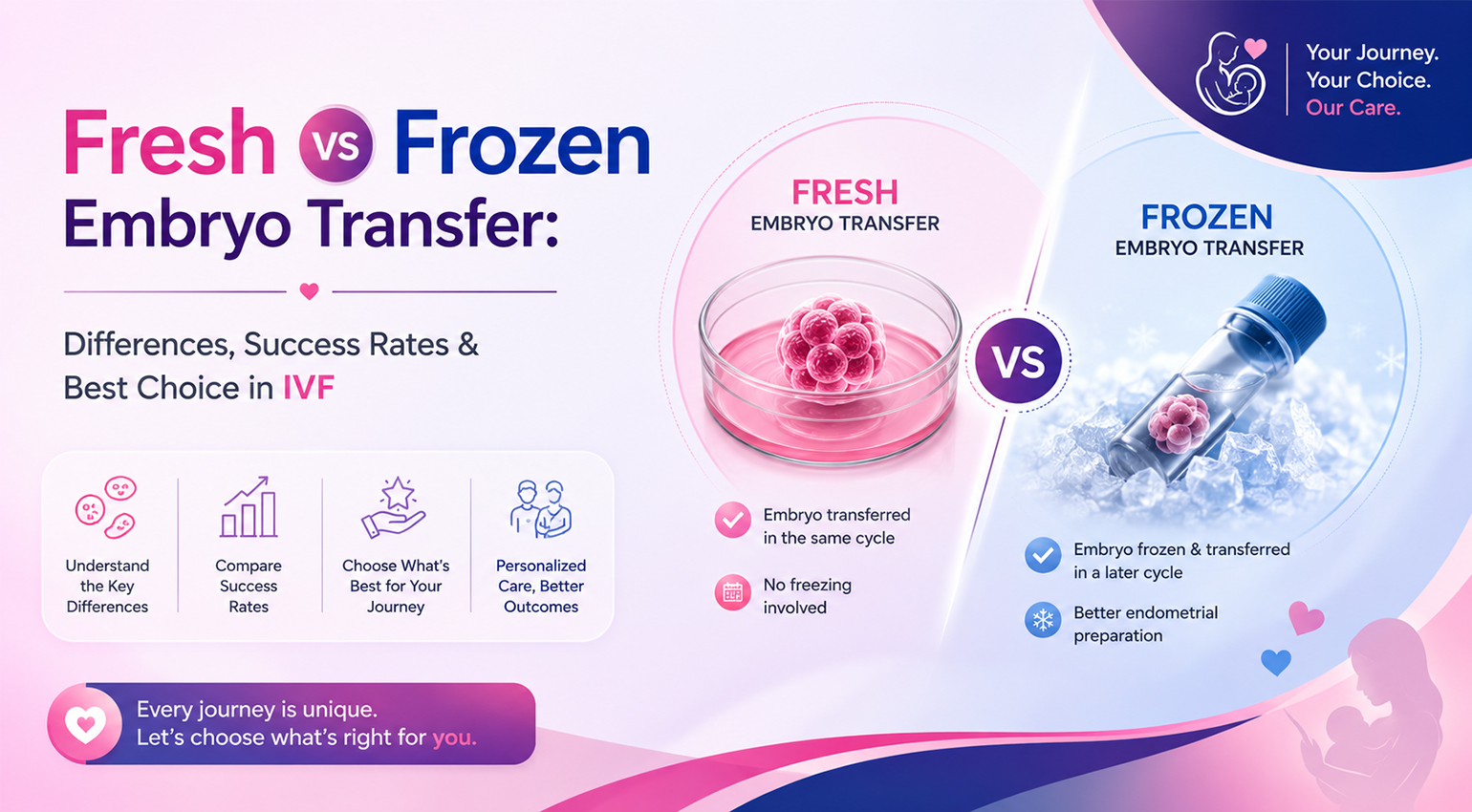 Fresh vs Frozen Embryo Transfer: Differences, Success Rates & Best Choice in IVF
 Understanding ICSI Treatment: Who May Need It, How It Works and What to Expect
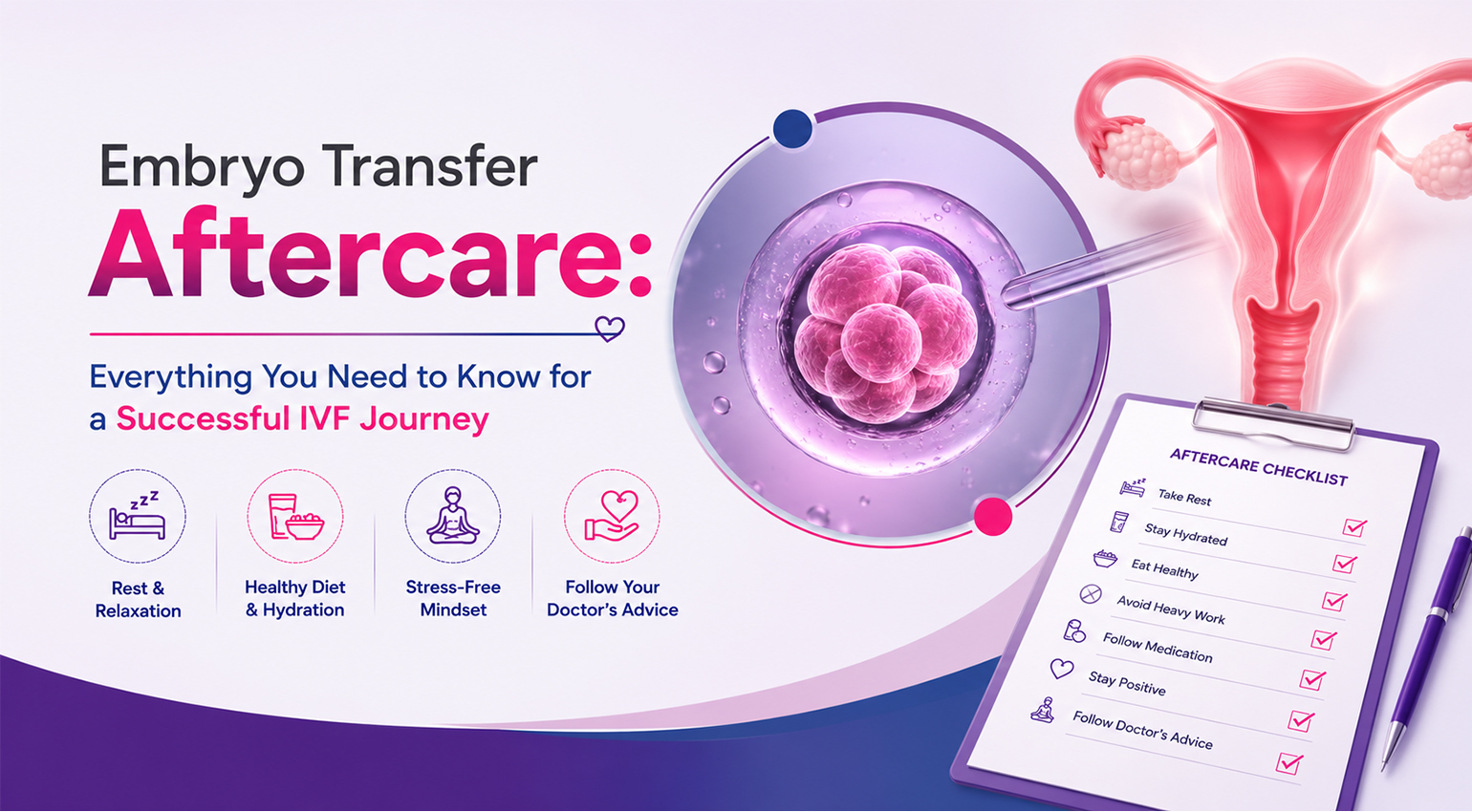 Embryo Transfer Aftercare: Everything You Need to Know for a Successful IVF Journey
 IVF After 35: What You Really Need to Know About Success Rates, Expectations and Treatment Options
 Natural Strategies to Enhance Egg Quality for IVF Success - Ferticore IVF Centre
 All You Need to Know About Preserving Female Fertility
 7 Signs That Your Embryo Transfer May Have Been Successful
 Understanding the Connection between Stress and Infertility
 Everything You Need to Know About Evaluation of Male Infertility
 A Comprehensive Overview of Follicular Monitoring Procedure and Success Rates at Ferticore IVF Centre
 10 Key Questions to Ask Your Fertility Specialist About IVF at Ferticore IVF Center
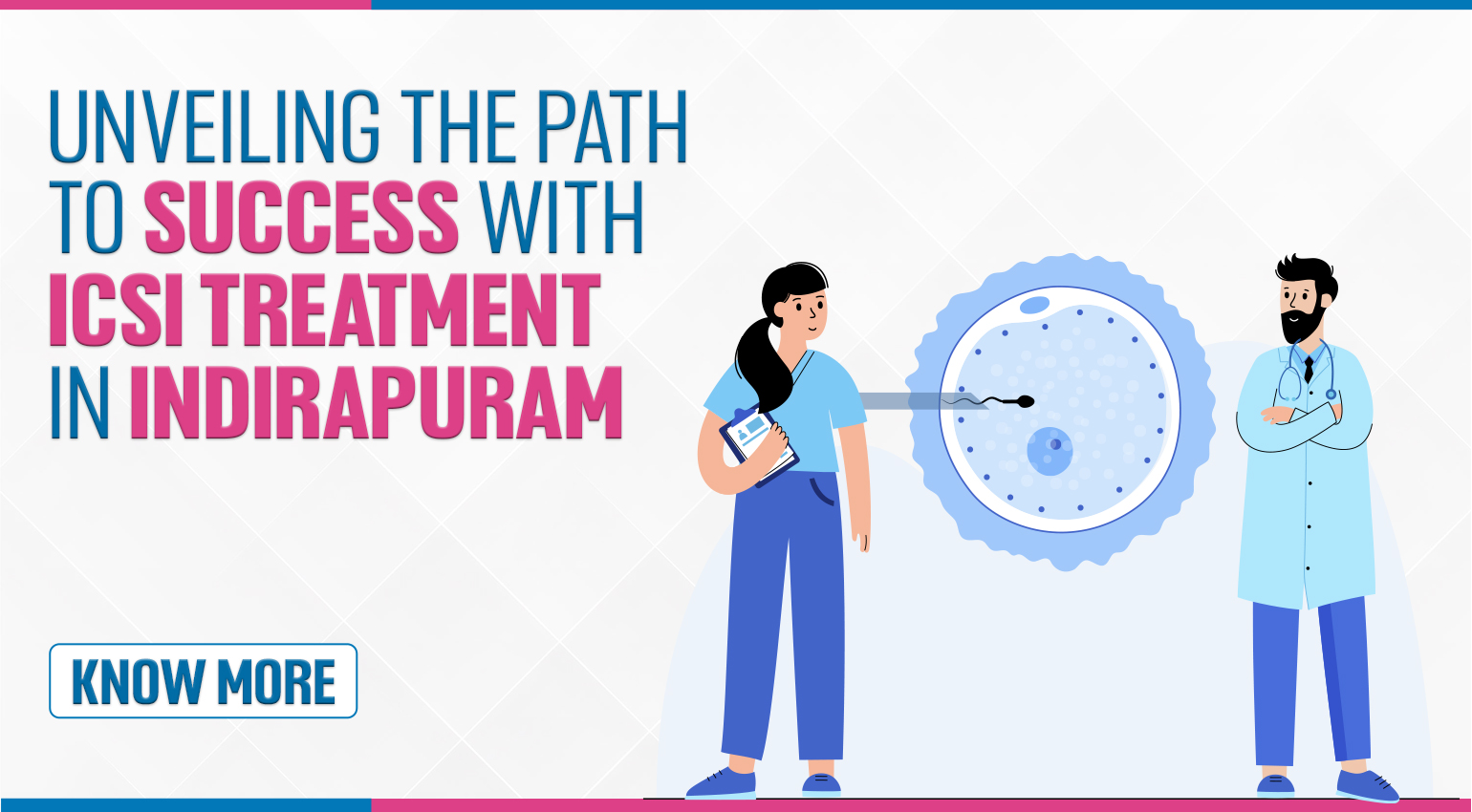 Unveiling the Path to Success with ICSI Treatment in Indirapuram - Ferticore IVF Centre
 Everything You Need To Know about Laparoscopy Surgery at Ferticore IVF Centre
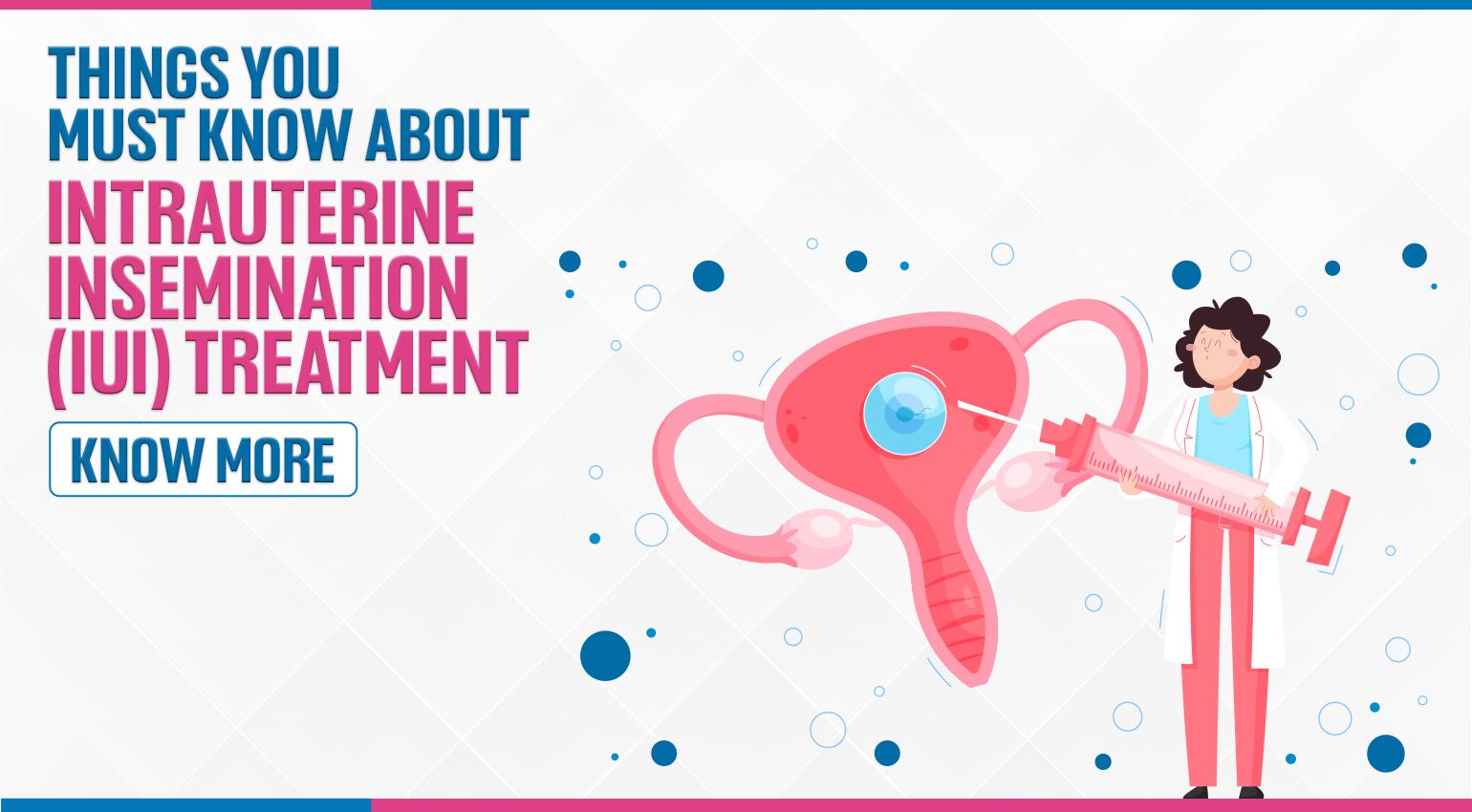 Things You Must Know About Intrauterine Insemination (IUI) Treatment- Ferticore IVF centre
 Understanding Fertility: Common Causes and Treatments
 Personalized Care in IVF: Tailoring Treatments for Individual Needs
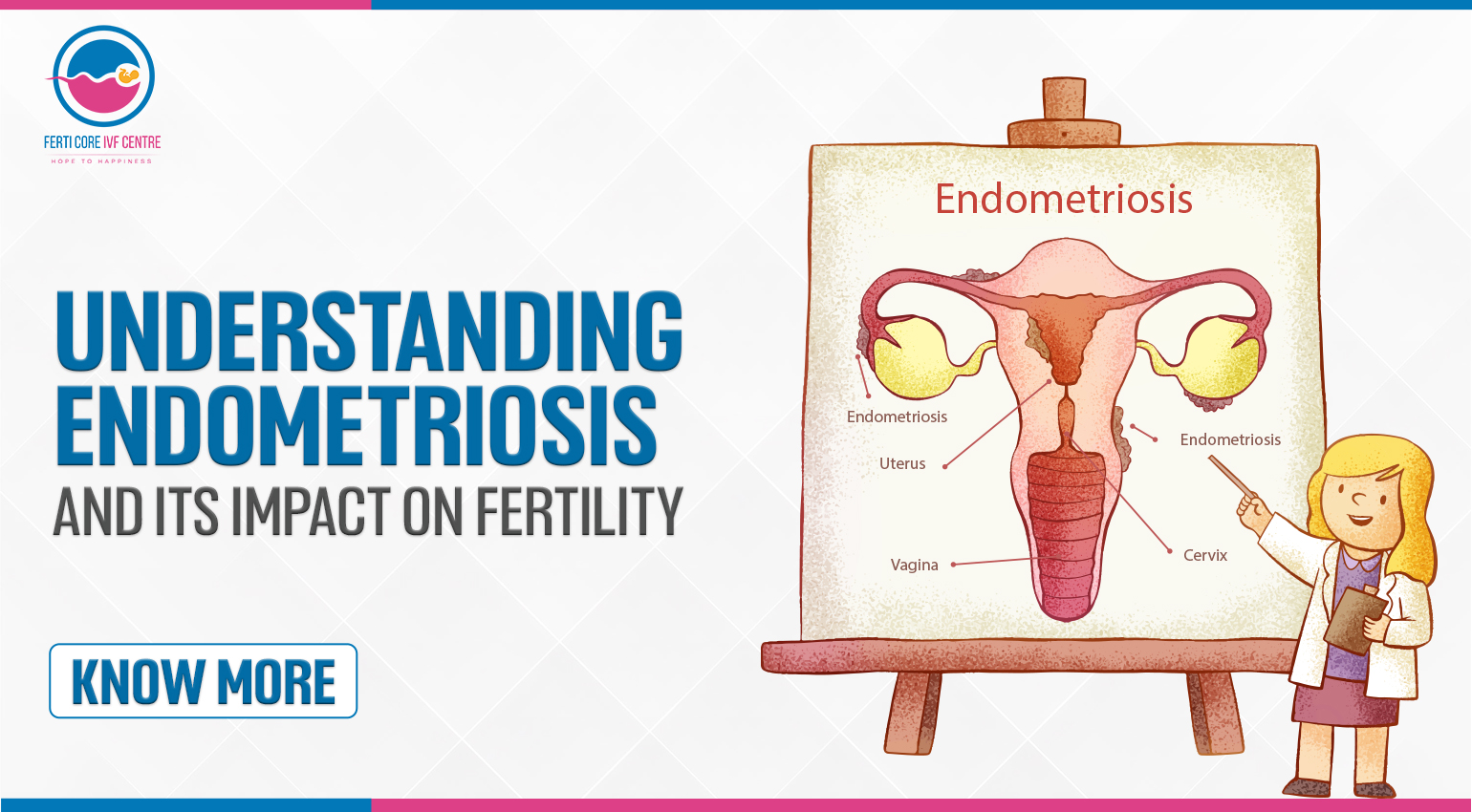 Understanding Endometriosis and its Impact on Fertility
 Navigating the IVF Journey: A Step-by-Step Guide
 10 Best Foods That Can Enhance IVF Success and Boost Fertility Naturally
Copyright © 2026 . Designed By Wafi Media Marketing Solutions Pvt. Ld.